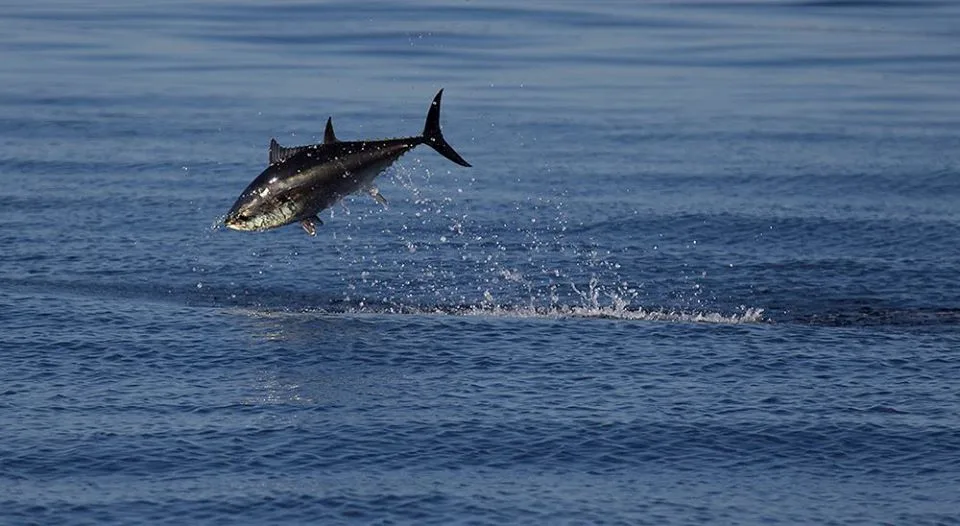
From the zoological charm of Thunnus thynnus to the ancient salting industry, and the noble cuts of Gallipoli culinary tradition.
Conceptual reconstruction of bluefin tuna (Thunnus thynnus) — example illustration, not a historical image.
The Mediterranean bluefin tuna (Thunnus thynnus) is one of the fastest and most impressive pelagic predators on the planet. It can reach 3 meters in length and exceed 600 kg in weight.
Equipped with a unique vascular system (rete mirabile) that allows it to maintain a body temperature above the surrounding water, it also has extraordinary muscles that let it sprint up to 70 km/h.
In spring, driven by warming waters, tuna entered the Strait of Gibraltar from the Atlantic Ocean to reach their Mediterranean breeding grounds. On their way to the Gulf of Taranto, they hugged the Salento Ionian coast, funneling into the fixed net architecture of Gallipoli.
Once landed, tuna had to be processed immediately before the flesh deteriorated.
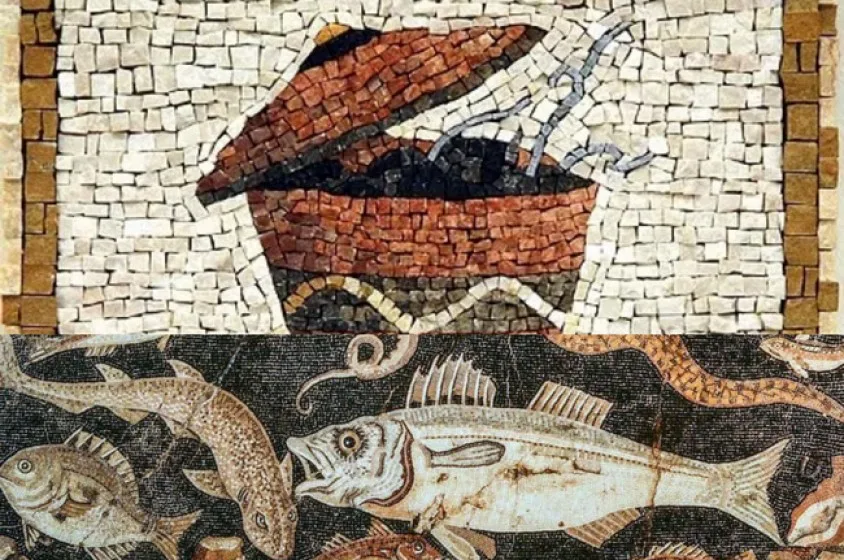
The master cutters (sutaturi) divided the fish into clearly defined parts. The flesh was washed repeatedly in seawater to remove residual blood.
Large steaks were boiled for hours in huge copper cauldrons with salted water. The slow cooking ensured sterilization and firm texture.
Tuna was layered in oak barrels (salatura), alternated with coarse sea salt and covered with the famous Gallipoli olive oil, ready for shipment to European markets.
Le tonnare non sono un unico strumento: esistono molte varianti di reti e camere. Anche nelle vecchie fonti anglosassoni si legge che “Tuna traps used for catching the bluefin tuna (Thunnus thynnus) are not a single gear type.”
This fishery is one of the oldest organized industries in the world, and the Gallipoli tuna fishery remains a local example of a tradition that has crossed millennia and technologies.
In recent times, sea protection has also relied on protected areas like the Pelagos Sanctuary, established in the late 1980s during a period of rapid swordfish fishing growth and increasing accidental cetacean catches.
And as climate change rewrites migratory routes, the defence of the sea becomes the future of this very story: learn more on the dedicated Ecology of the Sea page.
“The tuna fishery is one of the oldest organised fisheries in the world, and the bluefin tuna trap fishery is certainly the oldest industrial fishery as far as we know, dating back at least 26 centuries.”
Source: CV067010033.pdf
“The use of these large-mesh nets led to an increase in accidental catches of cetaceans or other animals whose tails became entangled in the nets.”
Source: ECOLOGIA DEI GRANDI PELAGICI DEL MAR LIGURE.pdf
Tuna fishery technique is based on a succession of chambers and net doors that guide tuna toward the final slaughter chamber. Today, this historical heritage meets the need to reduce impact on protected species and the shared waters of the Mediterranean.
Source: CV067010033.pdf • ECOLOGIA DEI GRANDI PELAGICI DEL MAR LIGURE.pdf
Original texts and studies explaining tonnara types, iconography and marine conservation.
From classical antiquity to the Renaissance, tuna inspired poets, court cooks and cookbooks, becoming a symbol of both luxury and the economy of no waste.
The first gourmet poet described tuna preservation methods and its use in dishes that could last, anticipating the art of salted fish.
In his epigrams, tuna enters Roman banquet culture and is celebrated as an ingredient worthy of a refined meal and a tasty solo dish.
From the Renaissance with Sacchi, Stefani and Corrado, tuna was desalinated, baked in foil or served with cabbage and tomatoes. A rich and popular culinary tradition.
In the 17th century, a legend spread across Europe that King Louis XIII, after eating tuna roe he had caught with his own hands, would father a son destined for the throne: an example of the mystique surrounding the fish and its aphrodisiac reputation.
As early as the 18th century, tuna was compared to a sea pig: every part was valued, from salted meats to roe, which was treated with care and turned into prized products.
The Gallipoli tonnara kitchen was a kitchen of no waste: nothing from the tuna was thrown away. While the finest cuts were shipped overseas or reserved for noble families, the crew received the humble but flavourful parts.
Historical Memory
According to the Marquis of Villa-bianca, tuna was like a sea pig, because it provided meat for an entire household: from roe prepared by salters to the noble cuts, nothing was wasted.
This gave rise to historic recipes: ficazza (a spicy sausage made with salted trimmings), Gallipoli-style tuna (braised with capers, cherry tomatoes and mint) and boiled bones used to make broth for on-board pasta.