Intangible Memory & Archives

The Tuna Fishermen Saga

Beyond the myth: the economic, human and ritual roots of the Gallipoli tuna fishery. A journey into the invisible architecture that governed the Ionian waters for centuries.

Ancient Roots of Tuna

The oldest traces of tuna fishing

Tuna fishing in the Mediterranean has millenary origins: the graffiti in the Genovese Cave on Levanzo tell of a hunting practice already in use between 10,000 and 6,000 BC.

Phoenicians and Greeks considered tuna a strategic commodity. Strabo describes it as a precious good transported as far as Cadiz, while Aristotle observes its migratory route from the Strait of Gibraltar into the inner seas.

Tuna was not only fishing: it was a reason for exploration and trade, so much so that coins bearing the fish were minted in the Atlantic. Its history crosses Phoenicians, Greeks, Romans, Byzantines, Arabs and Normans, up to the modern Salento tuna fishery era.

Homer, Polybius, Pliny, Plutarch and Galen also wrote about tuna, but it is thanks to Archestratus of Gela, the first gourmet poet, that we have the earliest descriptions of durable preservation methods. Martial praises it as a food in itself, a hearty meal for travelers who love strong flavors.
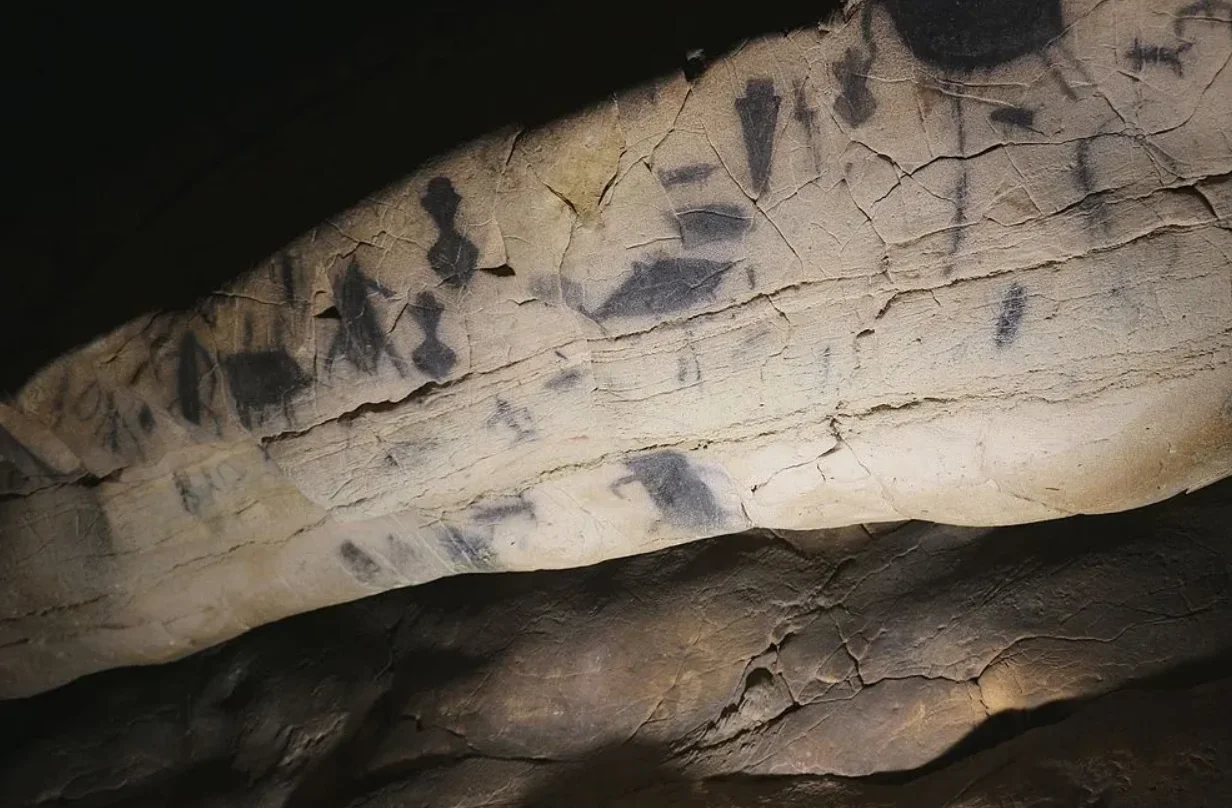
Prehistoric graffiti in the Genovese Cave showing tuna fishing scenes

The almadraba and the net labyrinths

The almadraba is an ancient fishing technique, widespread in Italy, Morocco, Portugal and Spain. Derived from Andalusian Arabic almaḍrába, it means 'a place where one strikes'.

Phoenicians

They sailed the Mediterranean and considered tuna a precious commodity for voyages beyond the Pillars of Hercules.

Ancient Greece

Archestratus of Gela describes long-lasting preservation methods and the use of tuna in ancient cuisine.

Rome

Martial celebrates tuna in his elegant banquet recipes and ties its consumption to aristocratic taste.
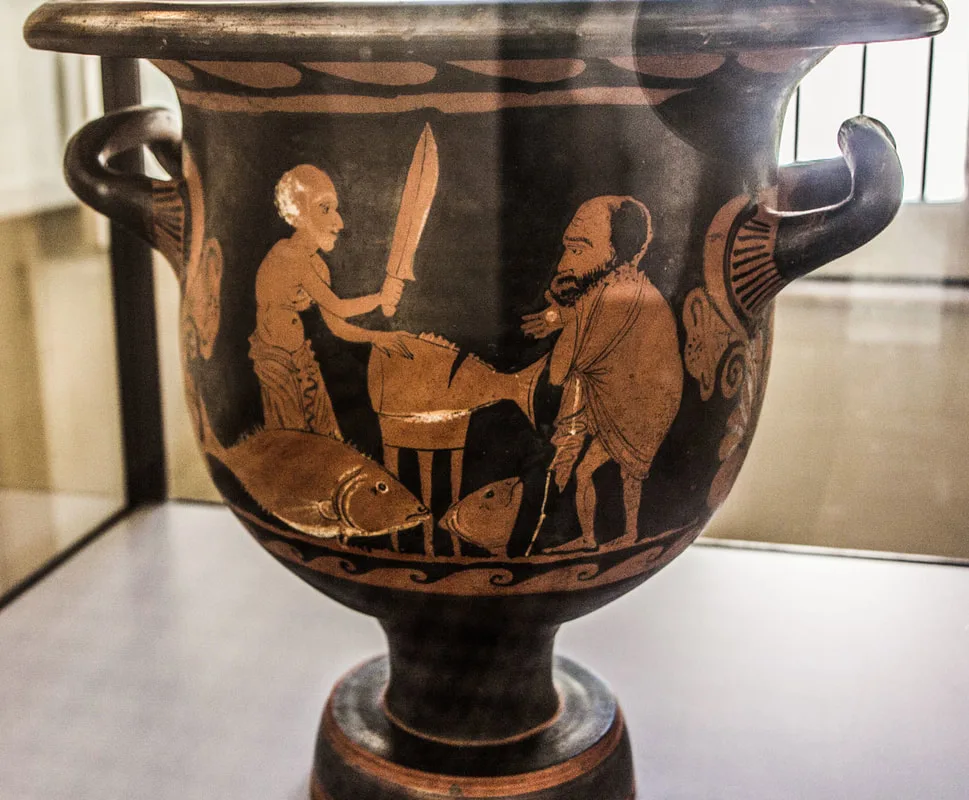
Greek bell-krater with a tuna sale scene
A Greek bell-krater with a tuna sale scene, an image evoking the historical value of the catch in the Mediterranean.
Culture and Rituals

The Cialoma Song

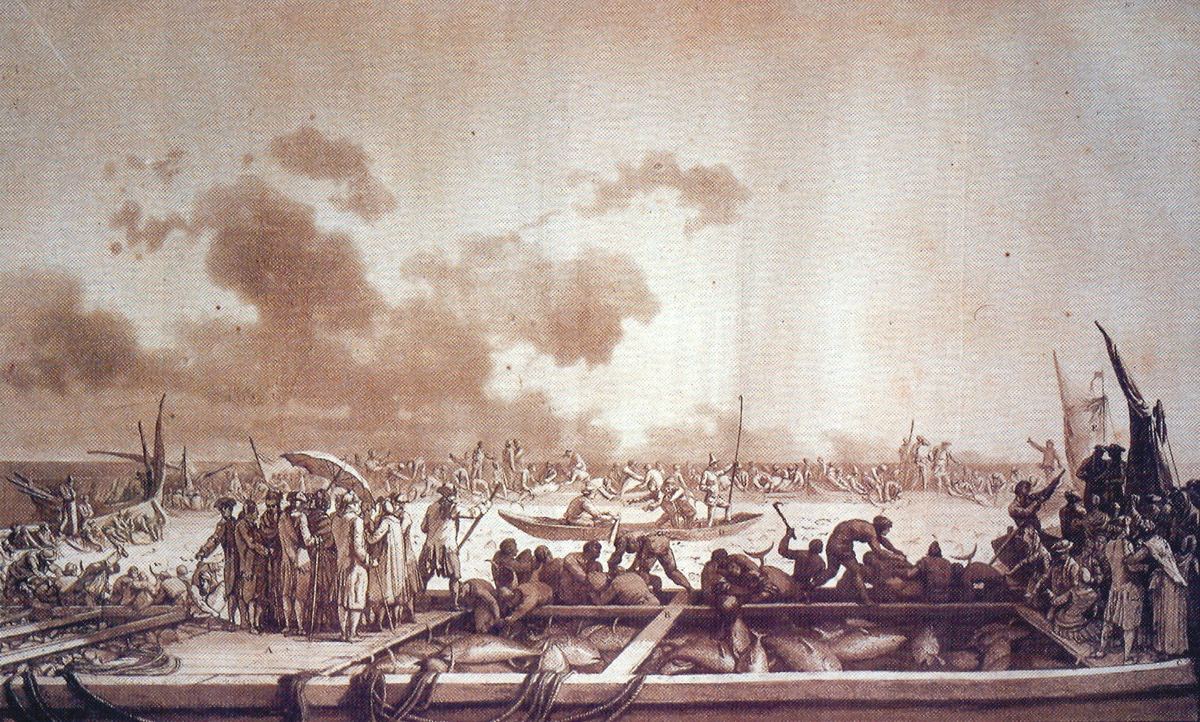
The work song, or cialoma, sung by the tonnaroti as they slowly and rhythmically hoisted the heavy net curtain, is an ethnographic treasure. They invoke Jesus Christ, all the saints, and also Allah, because the first words “Aja mola” are a Sicilian deformation of “Ai ya mawla”, Arabic for “O my Lord.”

The tonnara, with its nets, anchors, boats, craftsmen, fishermen and families, carries the imprint of all the civilizations that used it: Phoenician, Greek, Roman, Byzantine, Arab, Norman and later the modern post-Renaissance era.

Oral Tradition

The song marked the rhythm of the work and reinforced the collective identity of the tonnaroti.

Words and Faith

Prayer, devotion and religious references mixed Christianity with Arabic heritage.

Historical Timeline

From Origins to Silence

Click on a historical phase to open documents and archival sources

Pre-Roman Era

The Messapians and the Iapygians

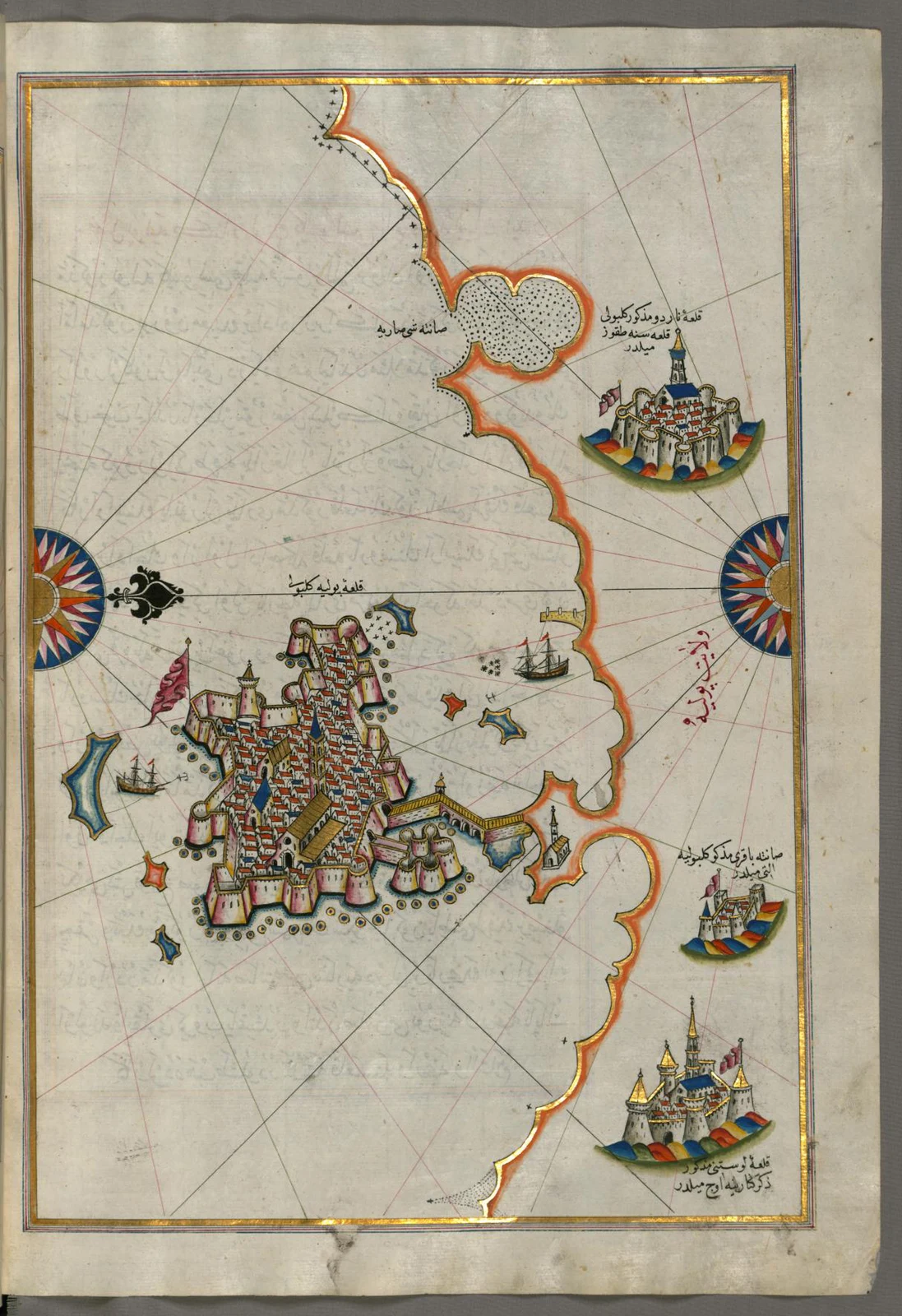
The first funnel-shaped fish traps built by the Messapian populations along the natural inlets of Gallipoli.

Filippo Briganti Open →
15th - 16th Century

Royal Privileges & the Red Book

Aragonese royal concessions and the 1526 diploma of Charles V safeguarding the monopoly over municipal waters.

Municipal Records Open →
18th Century

The 1,600m Funnel

The Gallipoli tonnara became the largest in Apulia: whales and monk seals were sometimes caught in the enormous nets.

Ionian Apex Open →
1960s - 1970s

The Last Lowering

The arrival of motorized industrial fishing led to the final dismantling of the fixed Salento tonnara.

Historical Memory Open →
Full timeline with cited sources

The extended timeline with dating, archival sources and bibliography for every entry.

Archive and document

From the Red Book to the lost documents

The transfer of the entire ancient municipal archive to the then provincial archive repository is recorded in the 1833 report written by municipal clerk Carlo Mazzarella and signed by mayor Francesco Pasca.

Even the city’s pre-unification documents were once stored in the Garibaldi theatre and were sold to a junk dealer, a process that led to legal proceedings and a long story of dispersal.

Source: Gallipoli_Archivio_delle_scritture_antic.pdf

These documents are not just a bureaucratic list: they represent the memory of a community that governed the sea, the nets and the rules of the tonnara.

“The Red Book and the ancient archive… the 1833 report… on the transfer of the entire ancient municipal archive to the then provincial archive repository.”

PDF Documents Available

Download and view the original files to explore historical, archival and tunny fishery themes.

Sea Lexicon & Dialect

The Tuna Fishery Glossary

The words of the tonnarotti: a linguistic heritage born from the meeting of Arabic, Latin, Greek and the Gallipoli dialect.

Rais Dialetto: Lu 'Rrais

From Arabic ra'īs (supreme chief)

The absolute commander of the tuna fishery. He had total authority over the manoeuvres, the lowering of the nets, the discipline of the tonnarotti and the exact hour of the mattanza.

Cialoma Dialetto: La Cialuma / Lu Canti

From Arabic jalā (invocation/song)

The rhythmic chant sung by the crew to coordinate, with bare arms, the recovery and hauling of the extremely heavy wet nets made of vegetable fibre.

Pedale Dialetto: Lu Pedali / Cavo da Terra

From Latin pedalis (base anchorage)

The long wall of net that ran directly from the coastal cliff (between Punta Pizzo and the gulf) and stretched into the sea to block the tuna's path.

Muciara Dialetto: La Muciara / La Varchicedda

From Arabic mugiarah (light boat)

The smallest and fastest rowing boat, boarded exclusively by the Rais to inspect the nets, spot the arrival of the shoals and give orders.

Camera della Morte Dialetto: Lu Corpu / La Cammera

The last basin of the fixed plant

The only net basin fitted with a bottom (called lu corpu). Once the passage was closed, the net was hauled up from the vessels for the final phase of the catch.

Tonno Rosso Dialetto: Lu Tùnnuru / Lu Pisce Rrussu

Thunnus thynnus

The majestic Mediterranean pelagics that, in spring, travelled up the warm currents of the Ionian Sea, passing off the waters of Gallipoli.

Progetto Museo Multimediale

Help us preserve history

We are digitizing documents, historic maps, family photographs and objects related to the tuna fishermen. If you have historical material, share it with our scientific committee.